PAGE 1
The Working Donkey, the Wild Donkey, and the Lion
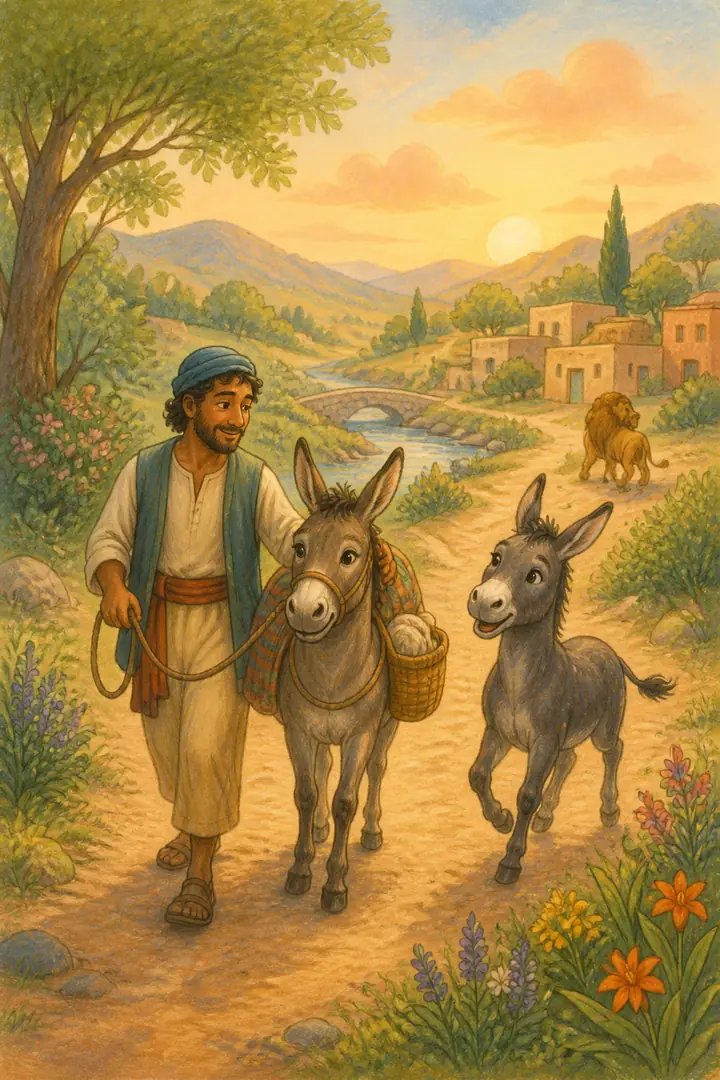
A wild donkey mocked a pack donkey for serving a driver and carrying loads. Then a lion approached.
Pillow Time Story
Ten thoughtful fables about balanced independence, respectful work, safe exits, prepared exploration, evidence, adaptability, humility, and honesty.
A wild donkey mocked a pack donkey for serving a driver and carrying loads. Then a lion approached.
The driver guided the working donkey to safety, while the unprotected wild donkey had to rely entirely on himself. He escaped and gained a more balanced view of freedom and support. Lesson: Independence has benefits, but reliable protection and cooperation have value too.
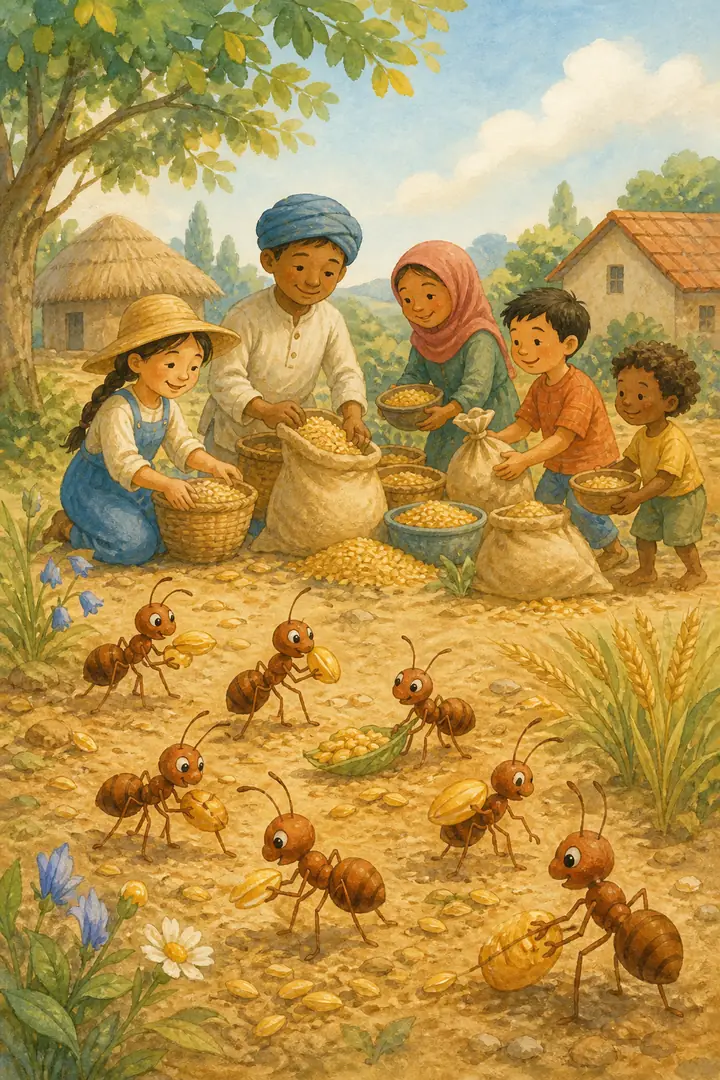
An old tale accused ants of gathering what others had grown. A gentler retelling shows them collecting scattered grain after harvest and storing it through steady work.
Their preparation inspired the village to reduce waste and share surplus before winter. Lesson: Industry is admirable when it respects other people's labor.
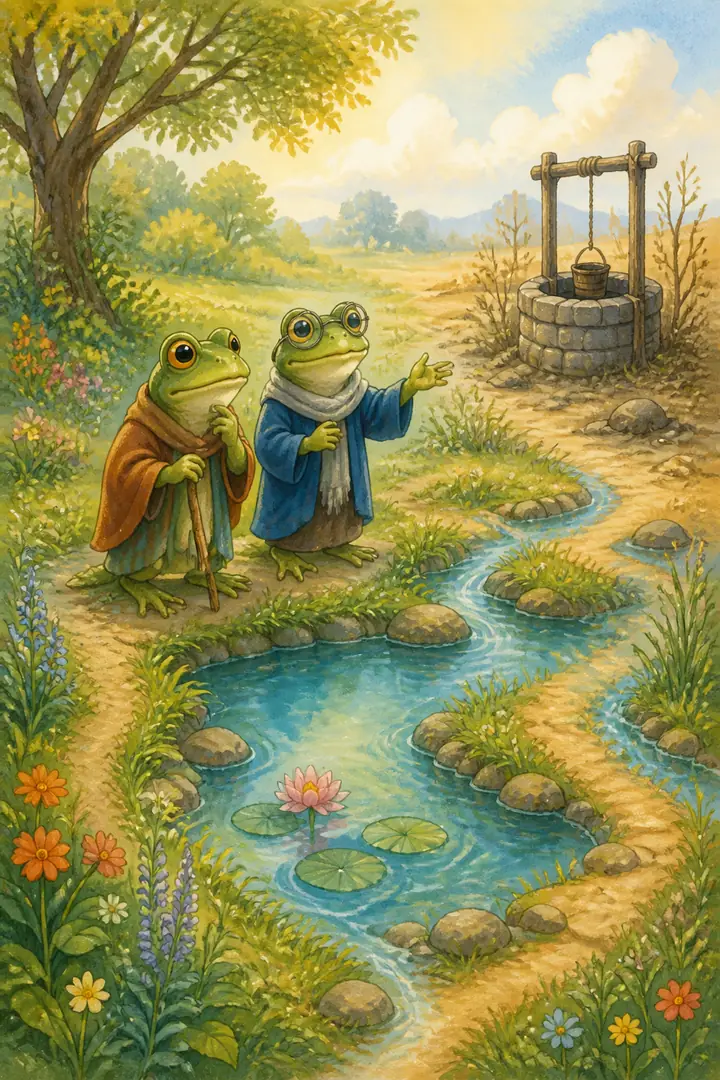
When their marsh dried, two frogs found a cool well. One wanted to jump in immediately.
The other asked how they would climb out if that water disappeared too. They continued searching and found a pond with a gentle bank and several safe exits. Lesson: Before entering a situation, make sure you know how to leave it.
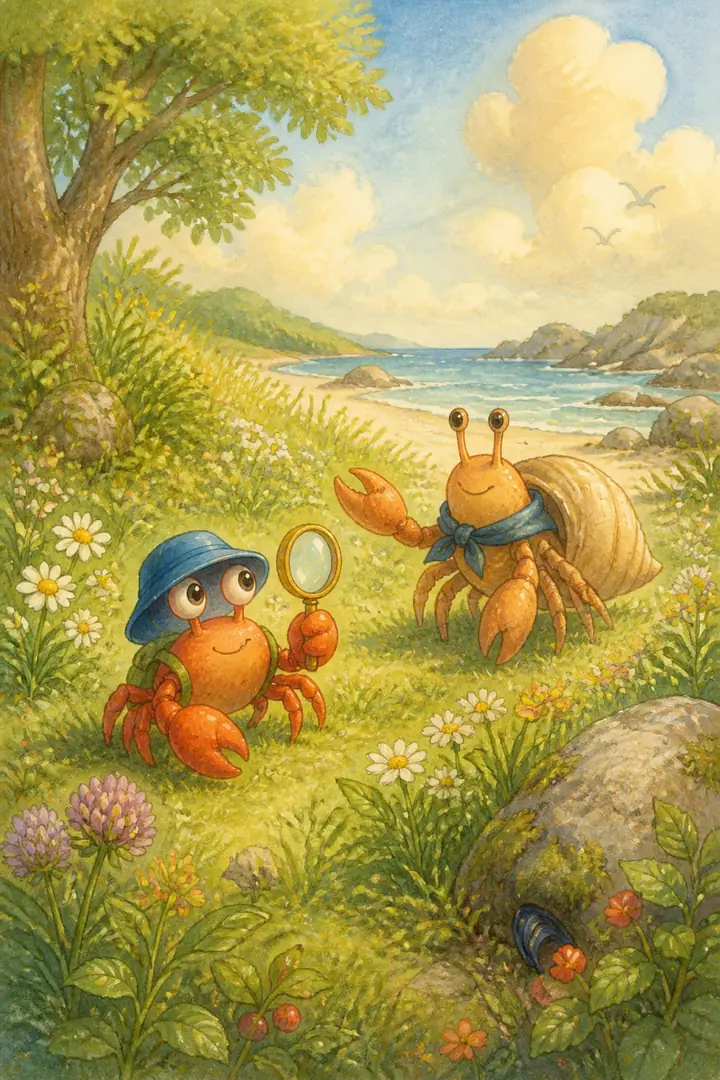
A crab left the shore for a green inland meadow. The new place looked inviting but offered little protection for a sea creature.
After a fox noticed him, the crab hid under a stone and returned safely with help. He explored again later with better preparation. Lesson: New experiences are rewarding when we understand the environment and its risks.
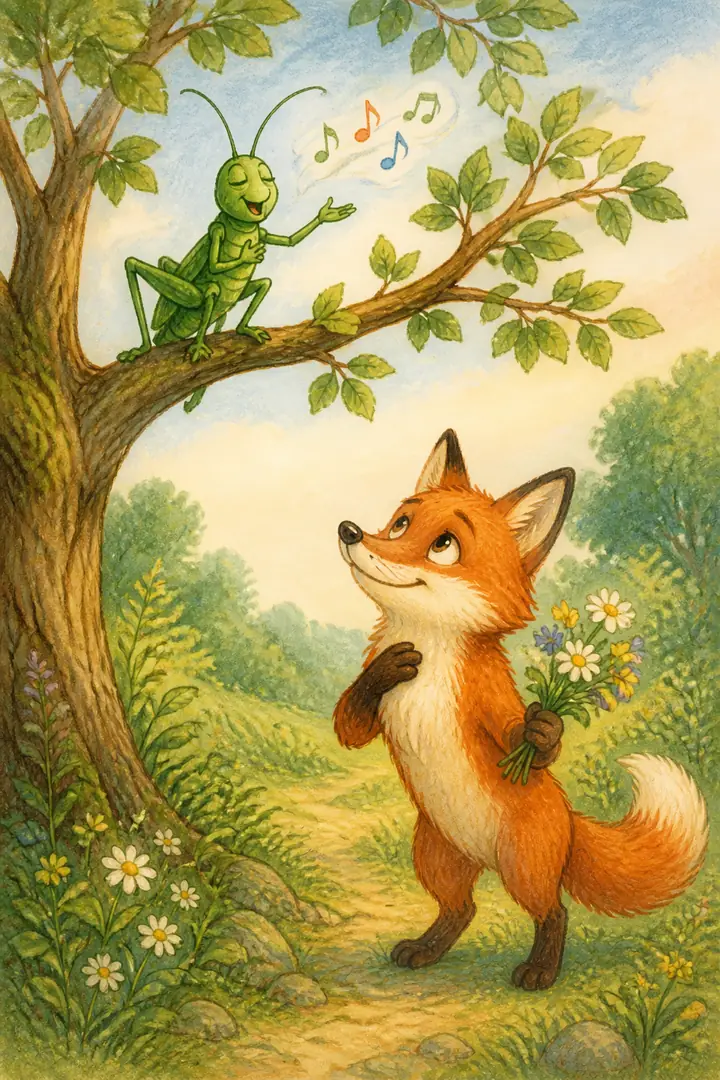
A fox praised a grasshopper's song and invited her down from a high branch. She noticed insect wings near the fox's den and understood his real intention.
Remaining safely above, she thanked him and continued singing. Lesson: Evidence from past behavior matters more than flattering words.
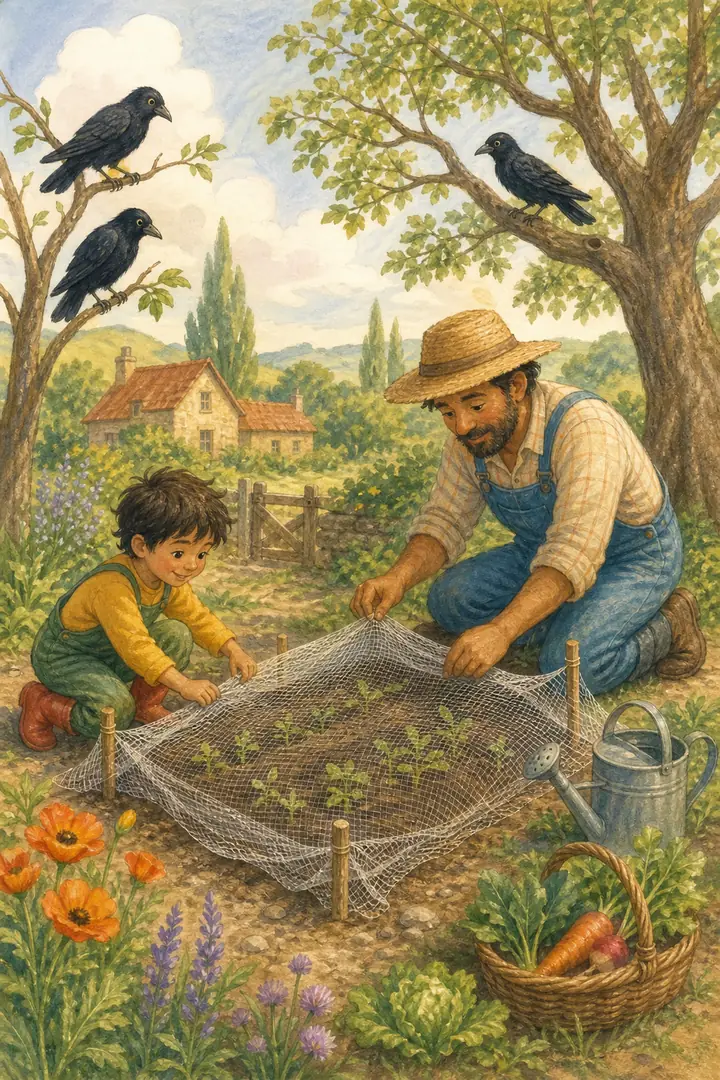
Birds learned that whenever a farmer asked his child for the sling, they should leave the field. The farmer changed to a secret signal and briefly surprised them.
Soon the birds recognized the new pattern too, and the farmer protected his seed with harmless netting instead. Lesson: Both people and animals adapt; lasting solutions should address the problem directly.
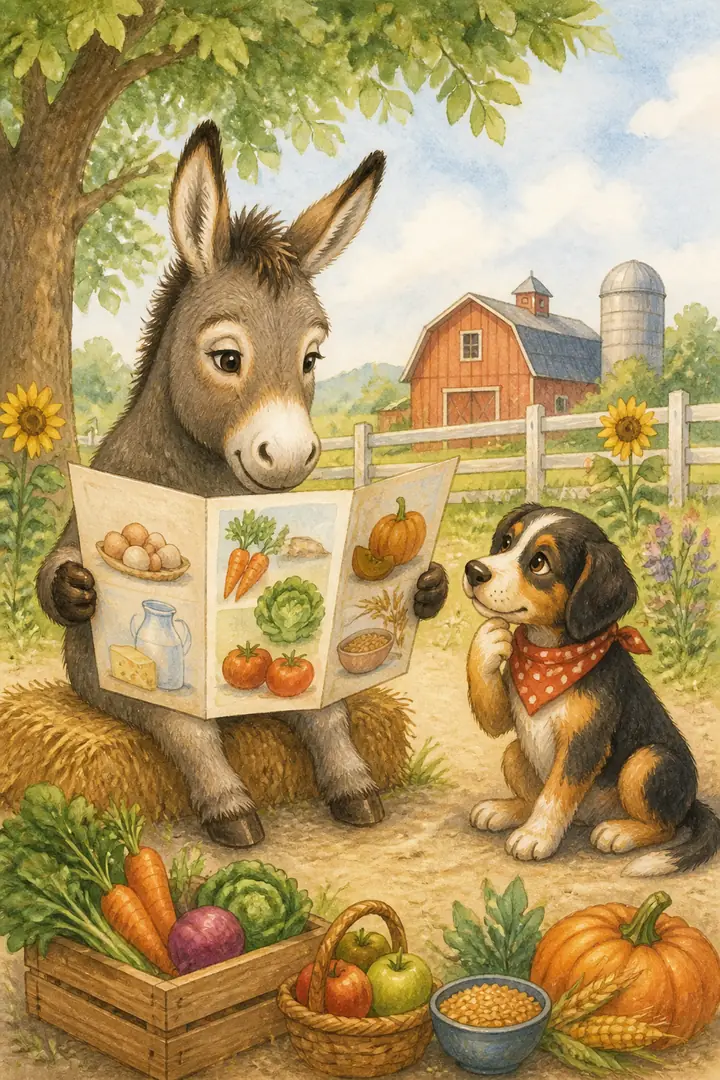
A donkey found a document describing hay, barley, and grass and read every detail with delight. His dog companion became bored and asked whether it mentioned meat or bones.
Finding nothing useful to him, the dog dismissed the entire paper. The donkey explained that information can be valuable to one reader even when it does not serve another. Lesson: Something need not interest us personally to be worthwhile.
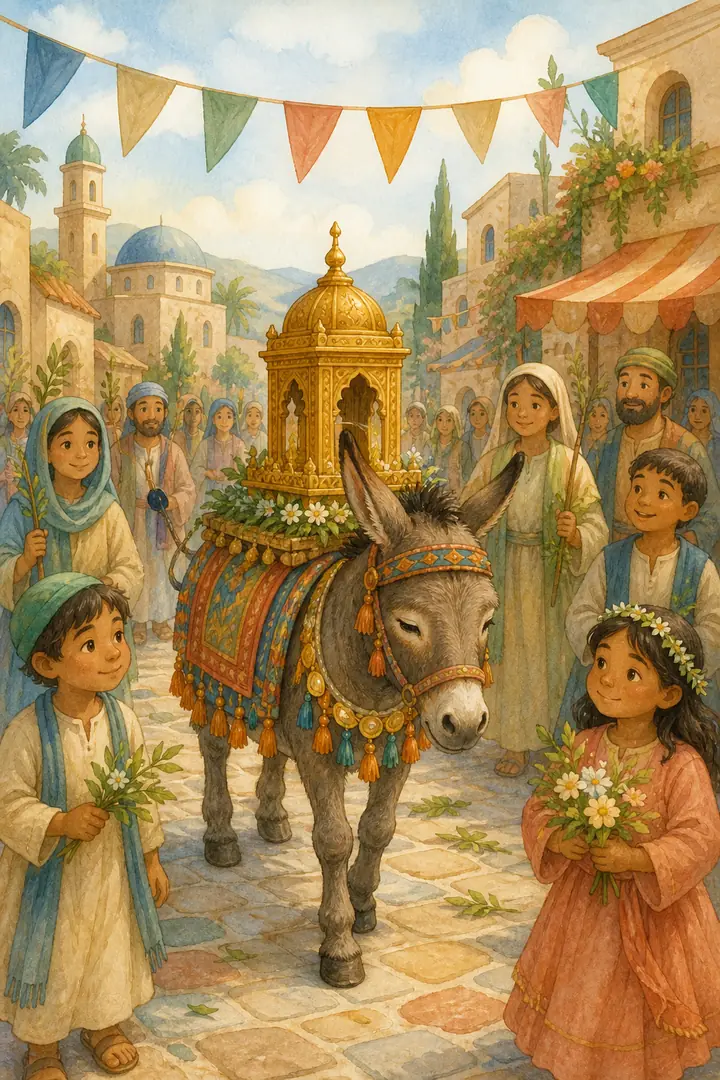
People bowed as a donkey carried a sacred image through town. The donkey assumed the respect was meant for him and refused to continue unless everyone bowed lower.
His driver explained whom they were honoring. The donkey resumed walking with a more modest attitude. Lesson: Do not take personal credit for respect given to what you carry or represent.
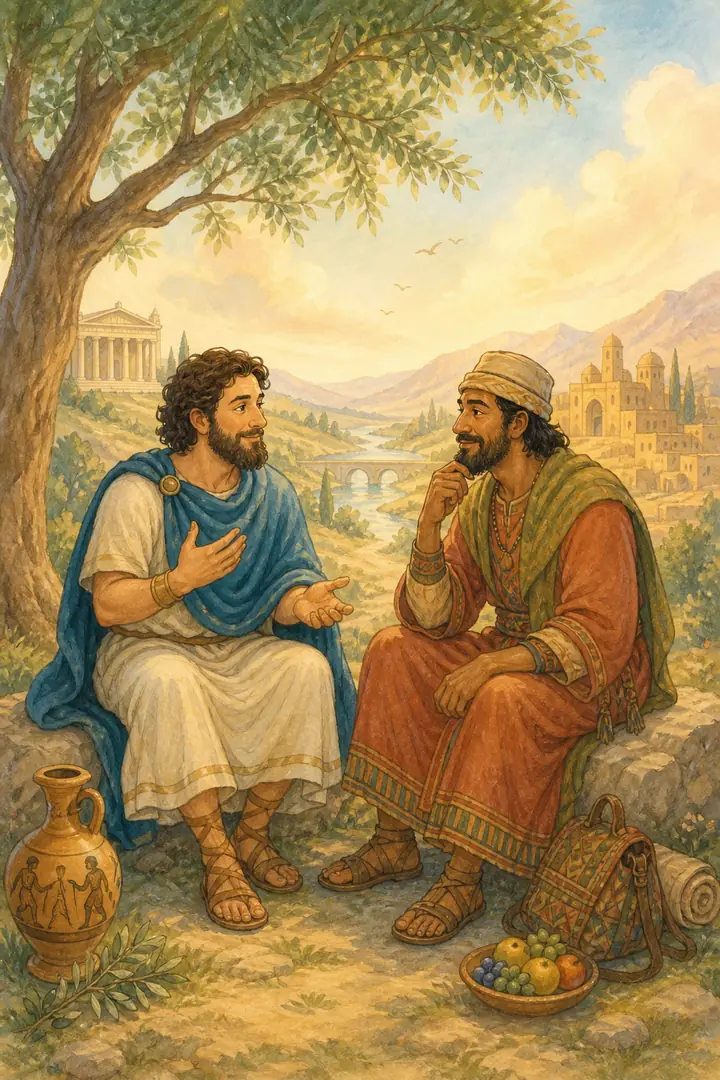
Two travelers argued over which city's hero was greatest. The quicker speaker overwhelmed the quieter one with clever words, but neither learned anything.
They finally agreed to compare deeds and values rather than local pride. Lesson: Winning an argument through speed or style does not prove the claim is true.
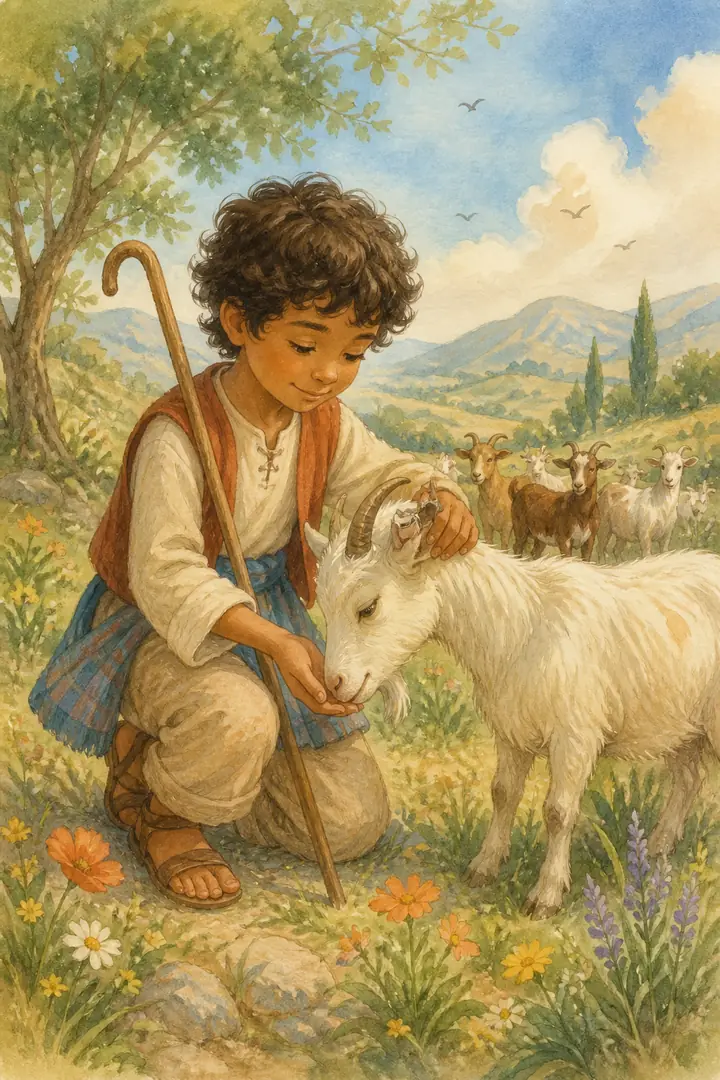
A goatherd lost patience with a wandering goat and threw a stone, accidentally chipping her horn. He asked her to keep the mistake secret.
The goat pointed out that the visible damage would tell the story even if she said nothing. He admitted what happened and changed how he guided the flock. Lesson: When evidence is visible, honesty is wiser than concealment.