PAGE 1
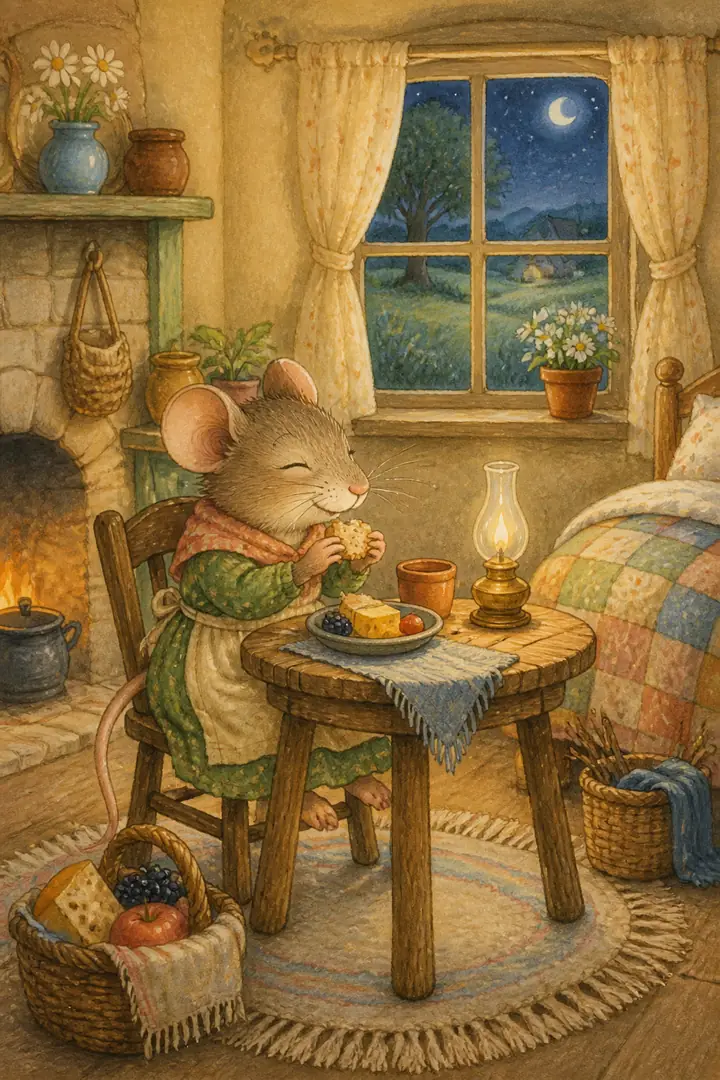
The Town Mouse and the Country Mouse
A country mouse served simple grains in her peaceful field home. Her town cousin invited her to a pantry filled with rich food.
Pillow Time Story
Ten thoughtful fables about peace, evidence, humility, safe freedom, self-acceptance, awareness, and genuine leadership.
A country mouse served simple grains in her peaceful field home. Her town cousin invited her to a pantry filled with rich food.
Every bite in town was interrupted by footsteps and danger. The country mouse returned gladly to her modest, peaceful supper. Lesson: Peace and safety may be worth more than luxury.
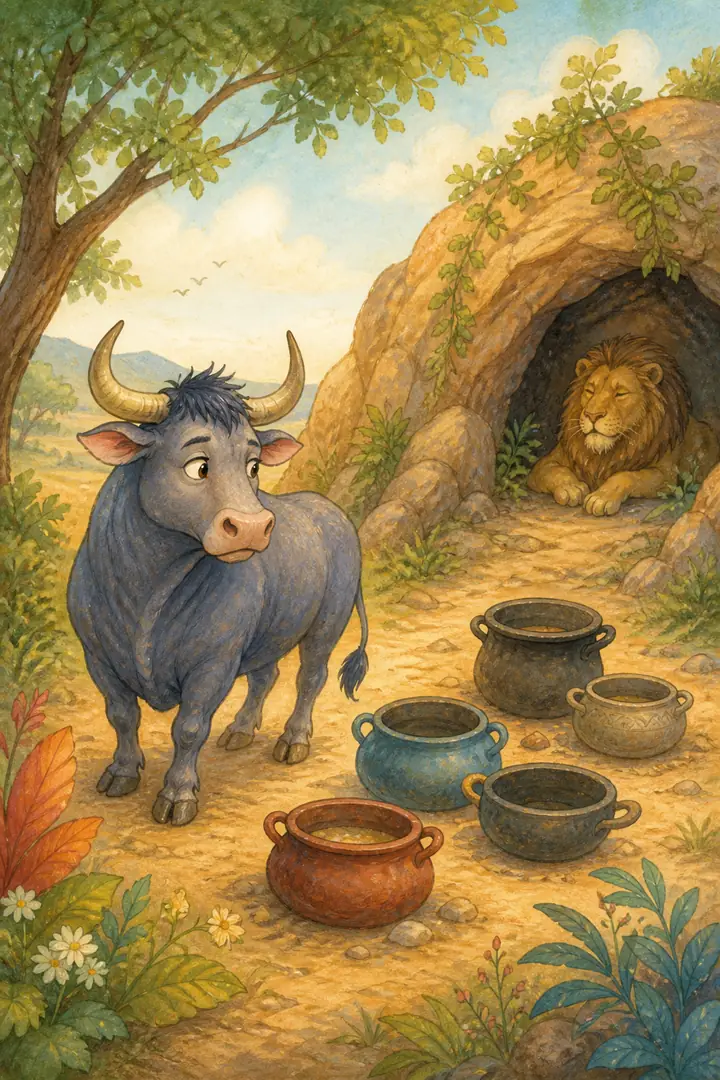
A lion invited a bull to dinner, claiming that a sheep would be served. At the den, the bull saw large cooking pots but no sign of any sheep.
He recognized the trap and quietly left before the lion could stop him. Lesson: When evidence contradicts a promise, trust the evidence.
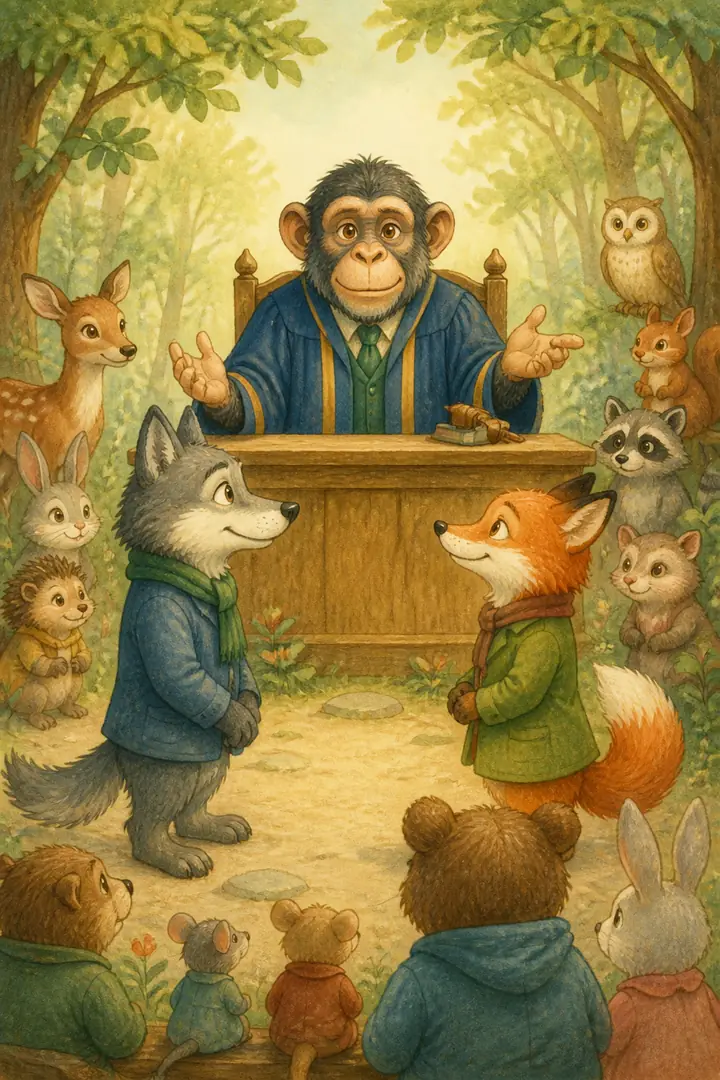
A wolf accused a fox of stealing, though neither animal had a trustworthy reputation. An ape judging the dispute found no clear proof for either story.
Instead of guessing, the ape required both animals to return with facts and witnesses. Lesson: Past dishonesty damages trust, but fair judgment still requires evidence.
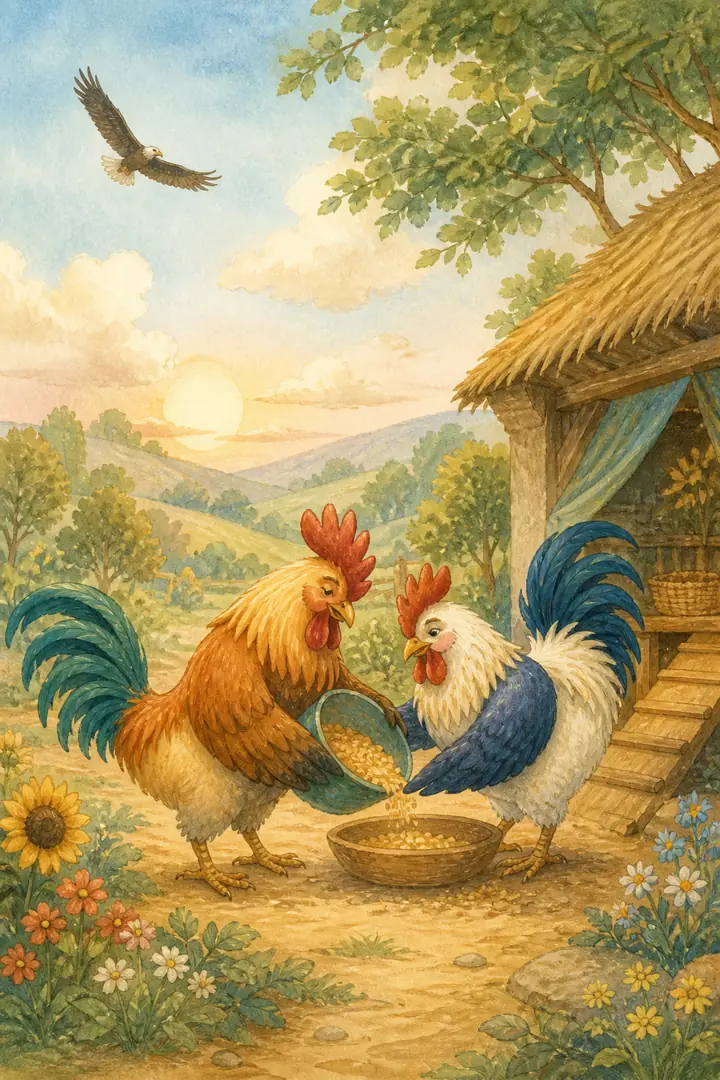
Two roosters competed for leadership. After winning, one climbed onto a roof and boasted so loudly that an eagle noticed him.
He hurried to shelter, apologized to his rival, and agreed that leadership required service instead of noisy pride. Lesson: Boasting after success can invite avoidable trouble.
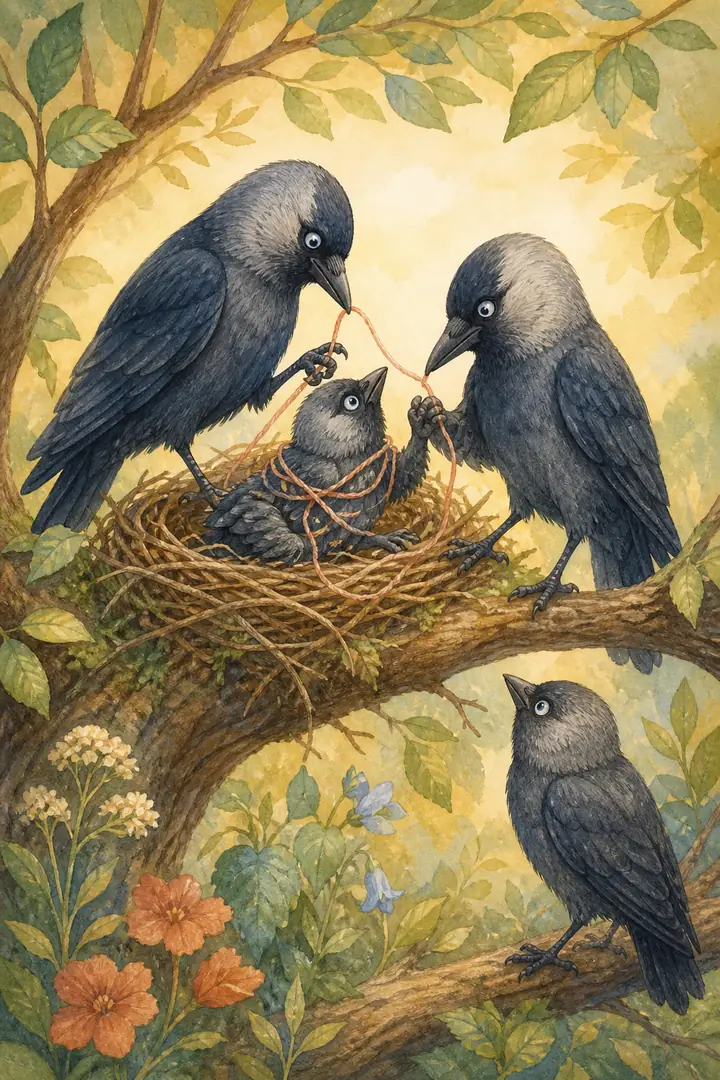
A pet jackdaw slipped away while a loose string still hung from his leg. Before long, the string tangled in a tree.
His family carefully cut it free and taught the children never to tether an animal unsafely. Lesson: Freedom is safest when we first remove hidden dangers.
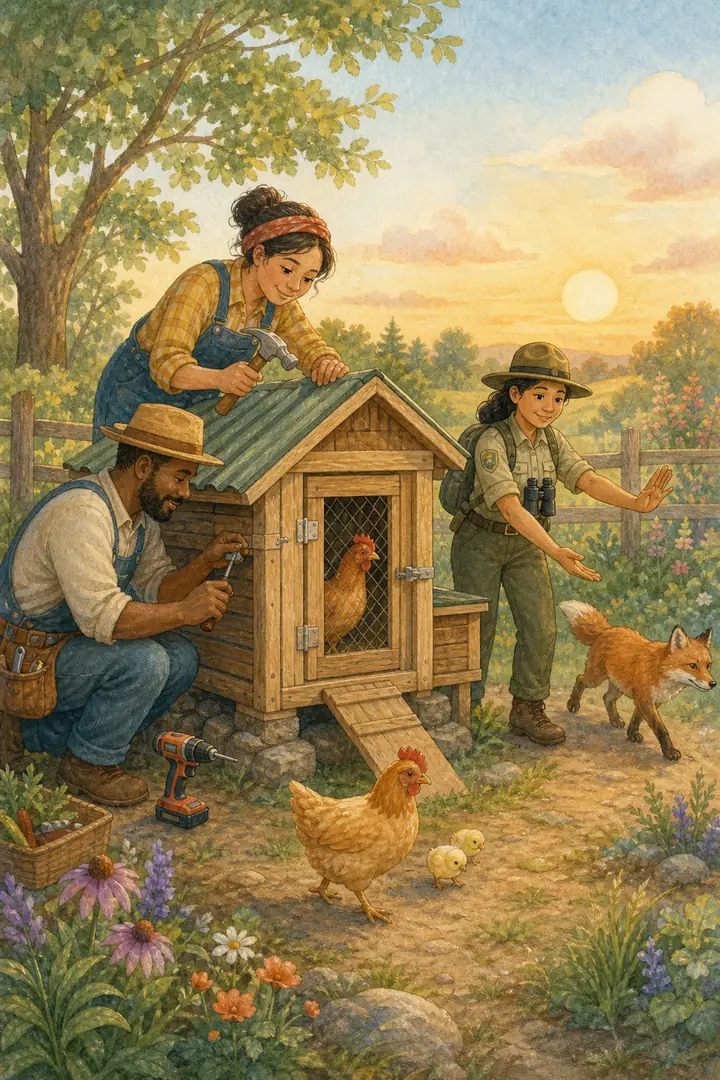
Angry about missing hens, a farmer planned a cruel revenge on a fox. His neighbor explained that panic could spread into the ripe fields and destroy the harvest.
They secured the henhouse and asked a wildlife ranger for help instead. Lesson: Revenge can harm the person seeking it; solve problems safely.
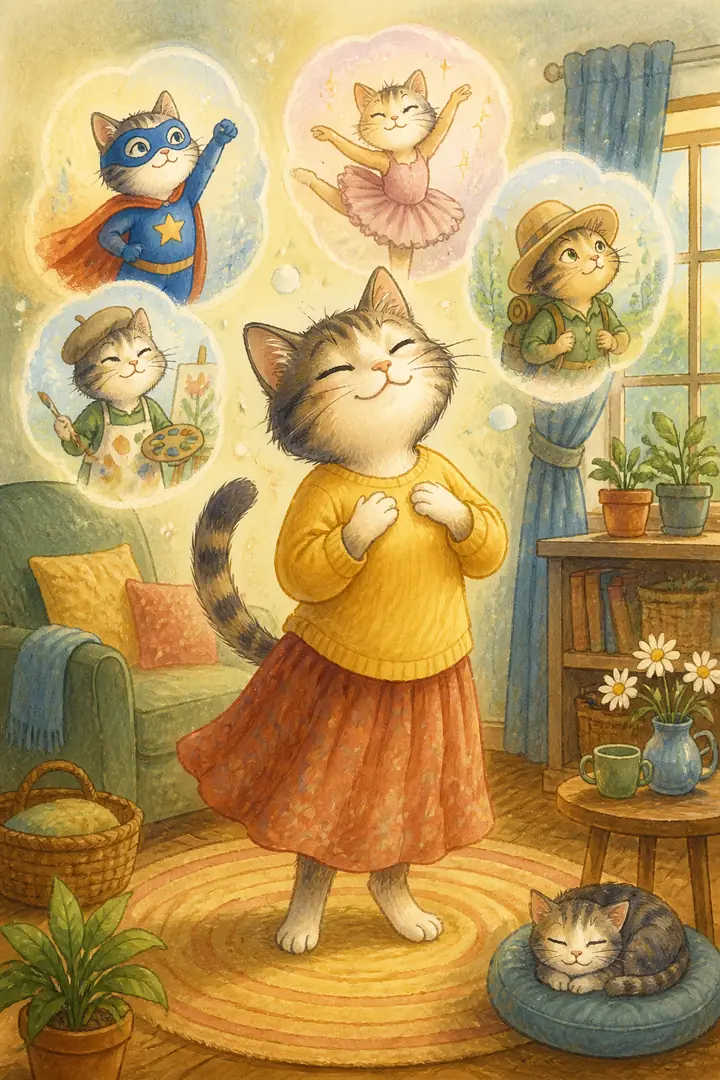
A cat wished to become human because she admired a young man. Her outward appearance changed, but her old instincts quickly returned.
She chose to become herself again and stopped believing appearance alone could change her nature. Lesson: Lasting change requires more than a new outward form.
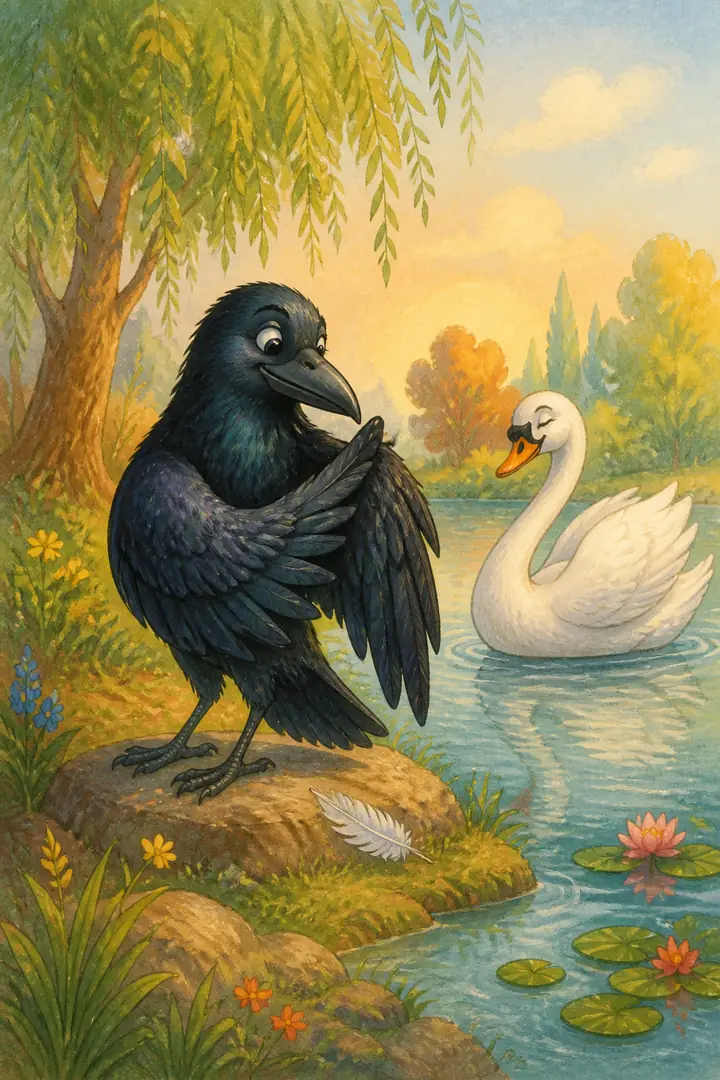
A crow believed that bathing in a swan's pond would turn his feathers white. He washed repeatedly, but his natural color remained.
Hungry and tired, he returned home and learned to care for his own glossy feathers. Lesson: Appreciate your nature instead of copying another's appearance.

A stag with sight in only one eye watched the land carefully and assumed the sea was safe. A boat approached unnoticed from that direction.
A warning call helped him escape, and he learned to consider risks from overlooked places. Lesson: Danger can come from an unexpected direction; avoid relying on one assumption.
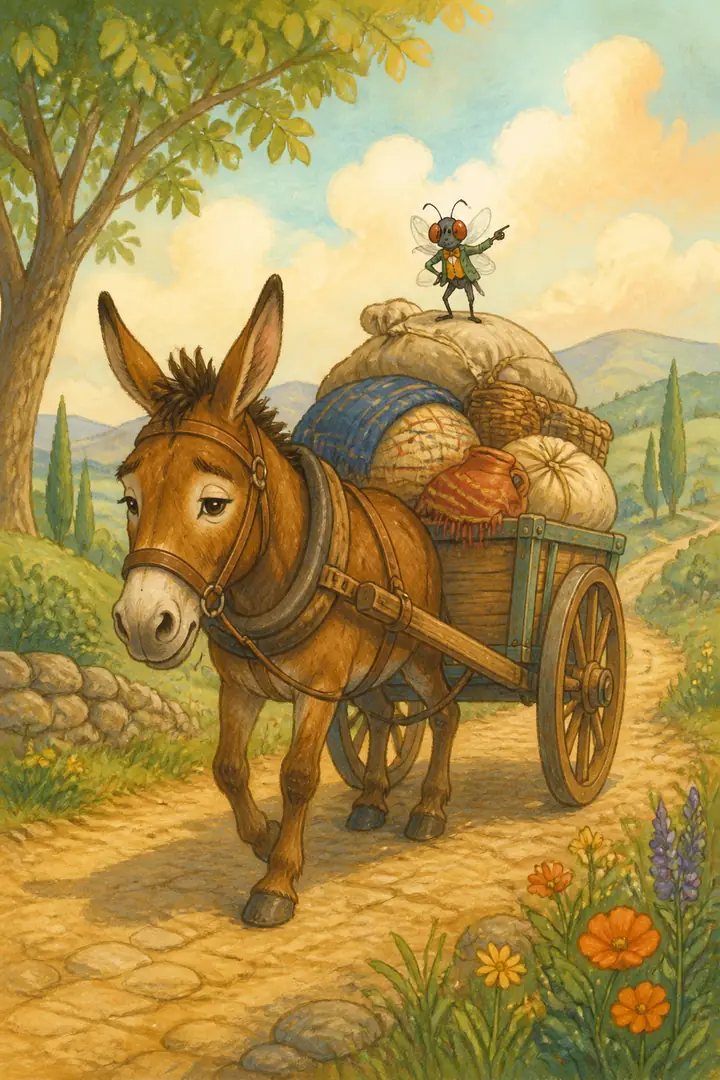
A fly perched on a cart and ordered the mule to walk faster, threatening to sting him. The mule remained calm.
He explained that he followed the driver's real signals and would not be distracted by someone carrying none of the load. Lesson: Empty commands do not equal genuine authority or contribution.