PAGE 1
The Eagle and the Kind Neighbor
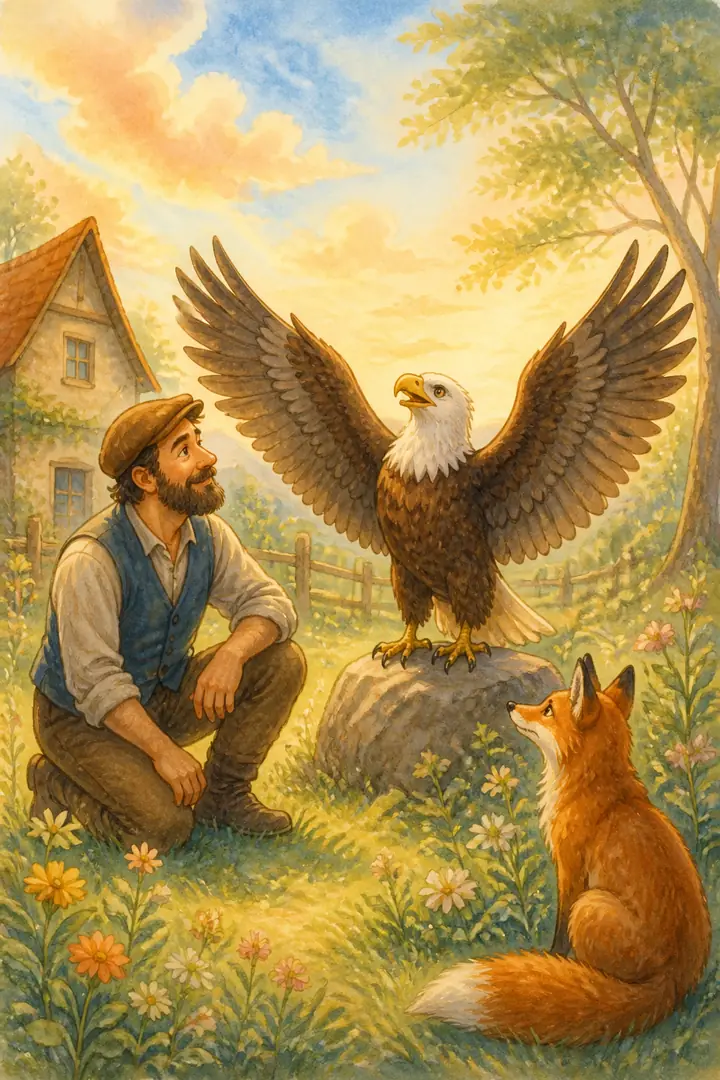
A captured eagle lost his flight feathers and sat unhappily among farm birds. A neighbor cared for him and waited patiently for the feathers to grow back.
Pillow Time Story
Ten gentle fables about gratitude, useful qualities, honesty, trust, preparation, humility, and self-acceptance.
A captured eagle lost his flight feathers and sat unhappily among farm birds. A neighbor cared for him and waited patiently for the feathers to grow back.
Once free to fly, the grateful eagle brought his helper a gift and stayed alert around anyone who had harmed him before. Lesson: Remember kindness, but also learn from past danger.
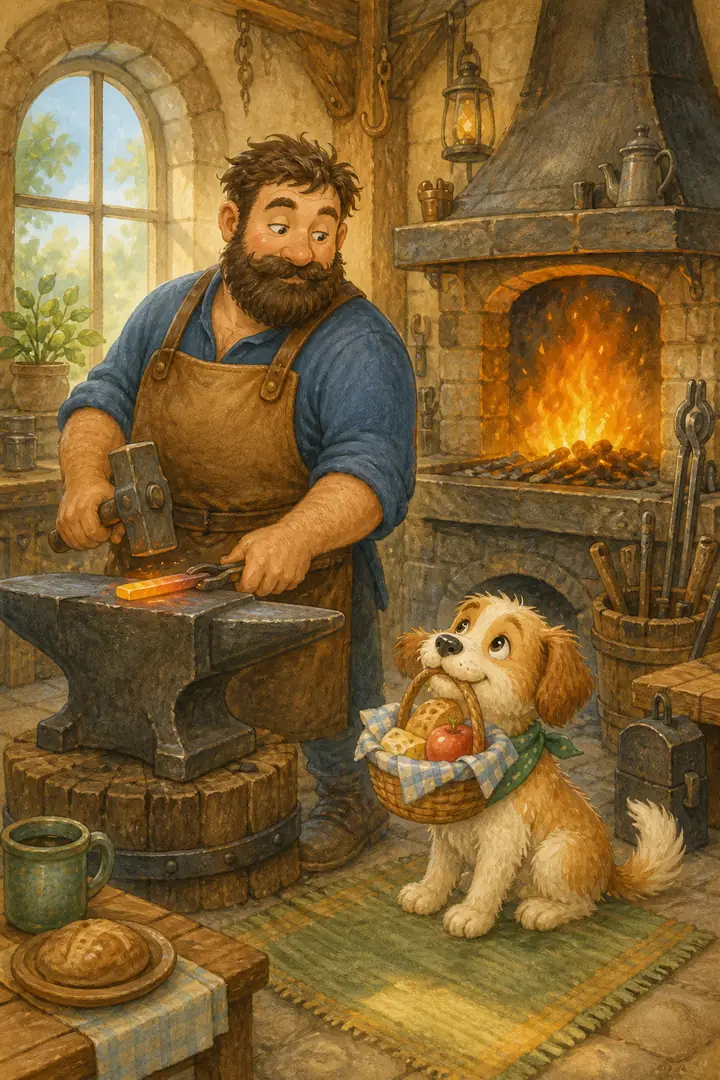
A blacksmith's little dog slept through every ring of the hammer. The moment the blacksmith paused for lunch, the dog woke and waited for a share.
His master laughed and explained that rewards should not always arrive without effort. Lesson: Contributing to shared work makes shared rewards more meaningful.
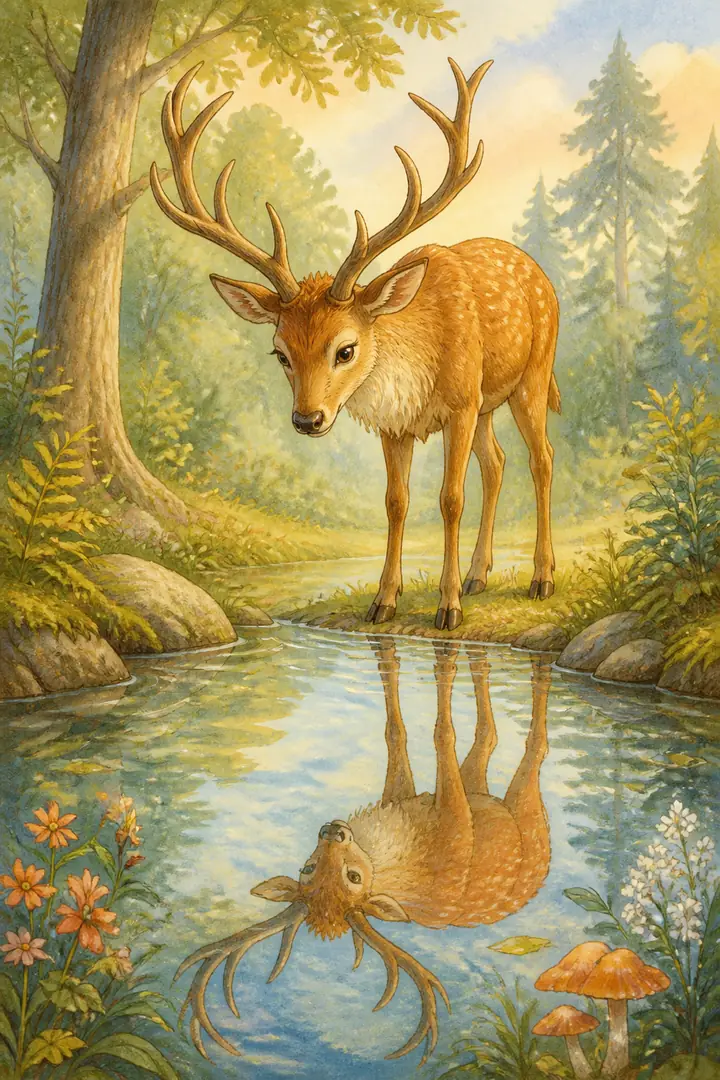
A stag admired his grand antlers in a pool but disliked his thin legs. When danger appeared, those slender legs carried him swiftly across open ground.
In the forest, his beautiful antlers tangled in branches. He escaped and learned to value usefulness above appearance. Lesson: The qualities we overlook may be the ones that help us most.
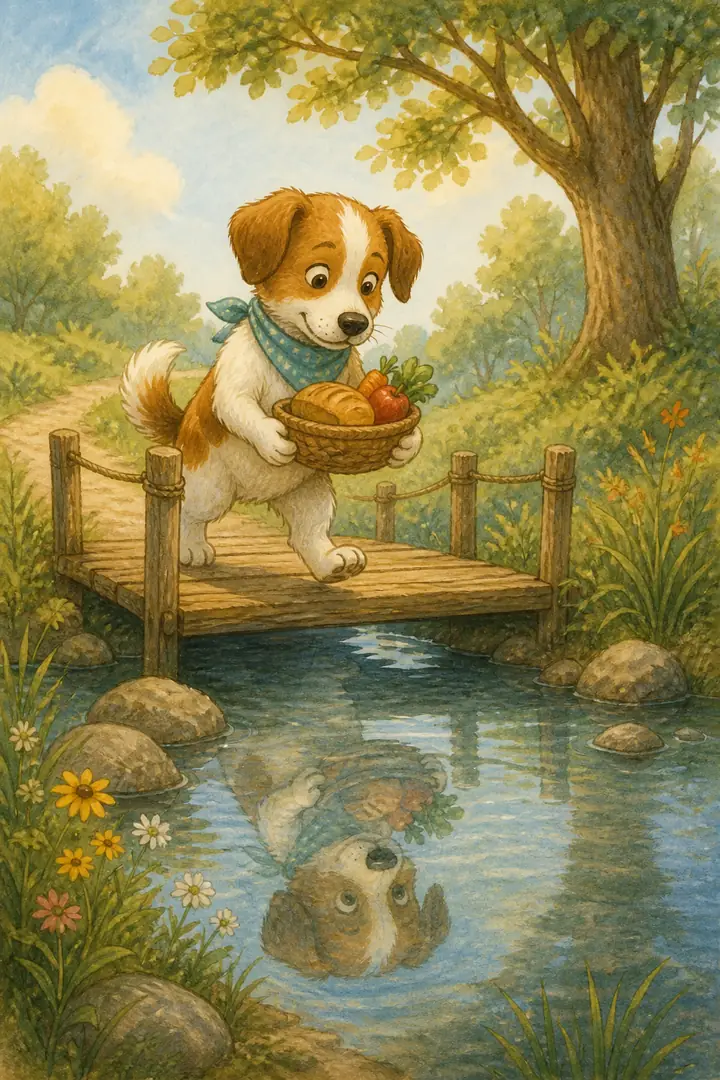
A dog crossed a stream carrying food. Seeing his reflection below, he imagined another dog with a larger meal.
He nearly opened his mouth to grab it, then recognized the image and kept his real food. Lesson: Greed can make us lose something real while chasing an illusion.
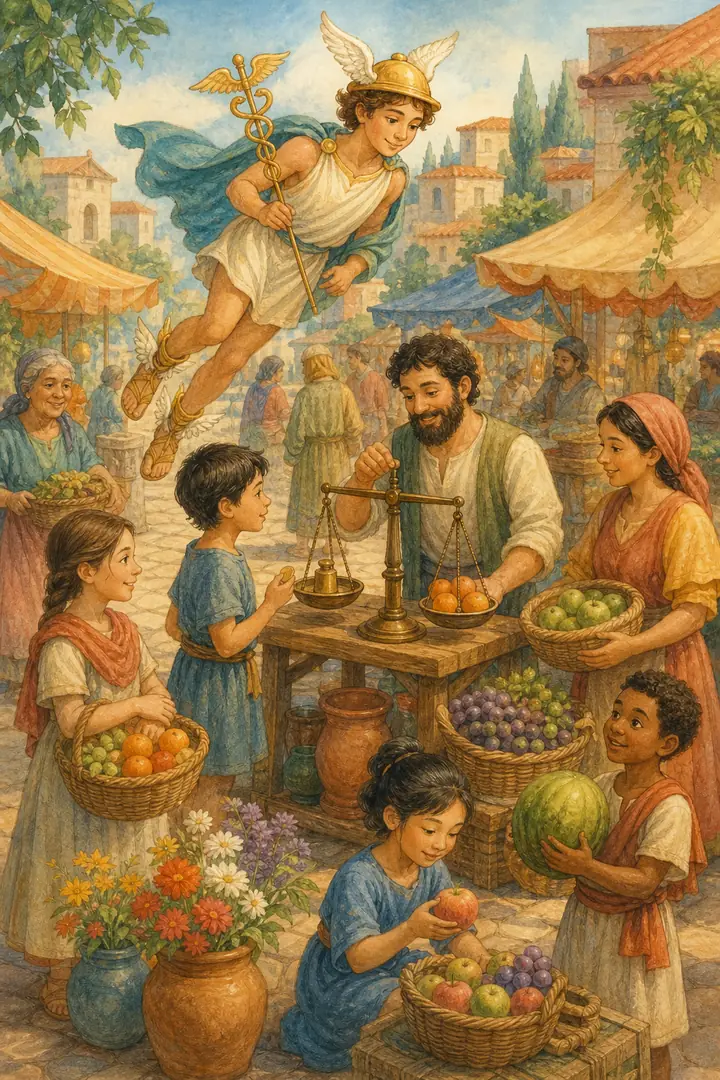
An old tale joked that merchants received different measures of honesty. A wiser village decided that no profession determined a person's character.
Customers learned to judge clear evidence, accurate scales, and fair behavior. Lesson: Examine claims carefully instead of trusting stereotypes or sales talk.
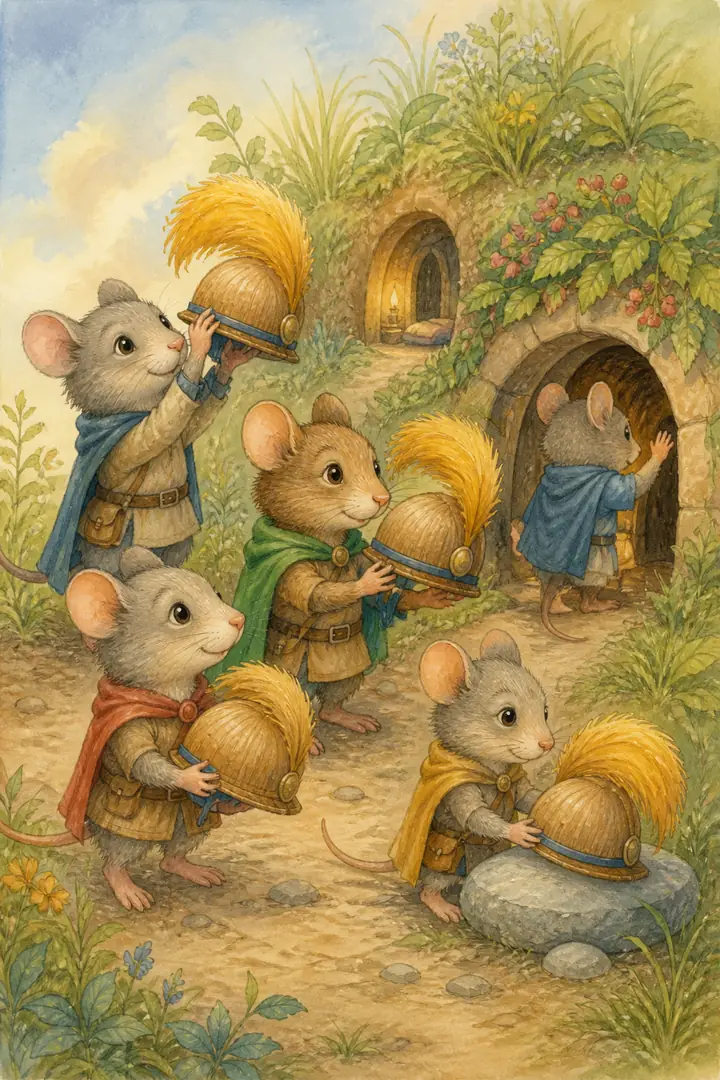
The mice chose large leaders and gave them tall straw plumes so everyone could recognize them. When danger came, the decorations caught at the burrow entrances.
The leaders removed the plumes and chose practical signals instead. Lesson: Status brings responsibilities, and showy symbols can become burdens.
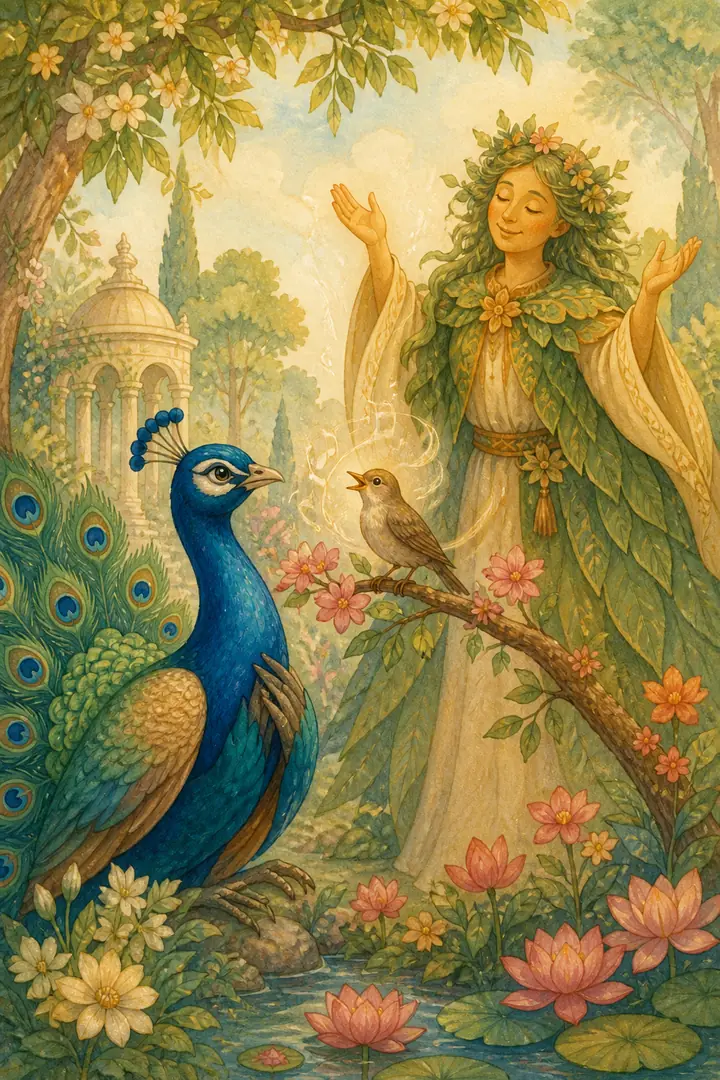
A peacock envied the nightingale's song and complained to Juno. She reminded him that the eagle had strength, the nightingale had music, and he had magnificent feathers.
No creature possessed every gift, so the peacock began listening with admiration instead of comparison. Lesson: Appreciate your abilities without resenting someone else's.
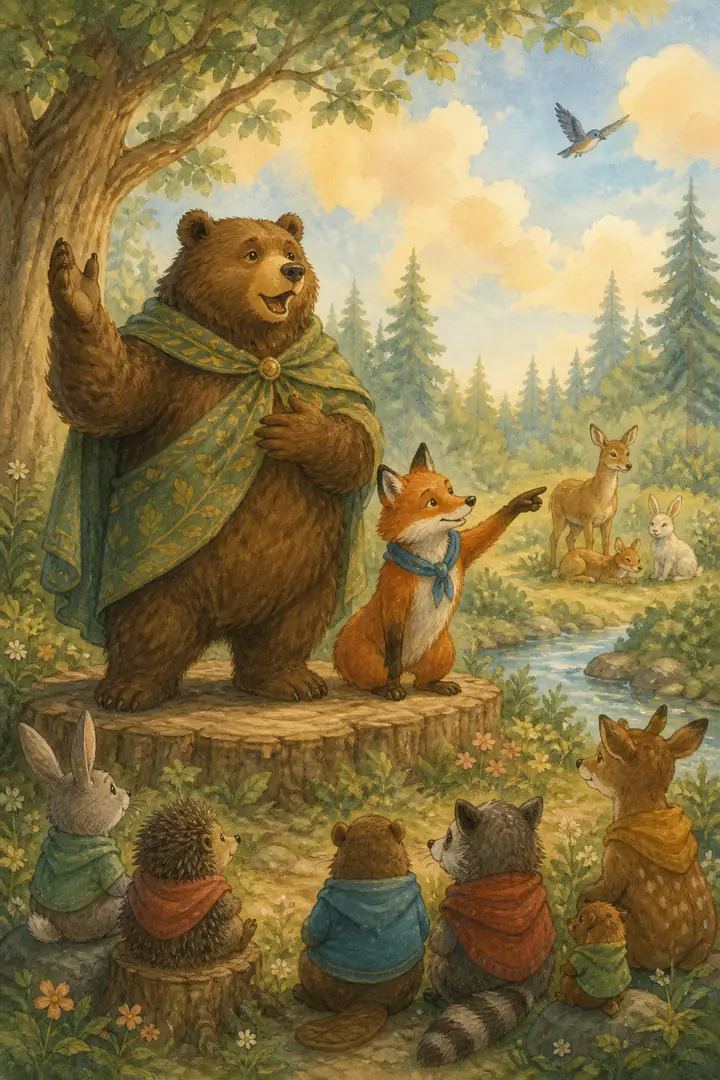
A bear boasted that he was gentle because he never disturbed animals that had already died. A fox replied that true kindness meant leaving living creatures in peace too.
The bear realized that a fine claim mattered less than daily behavior. Lesson: Good character is shown by actions, not flattering descriptions of ourselves.
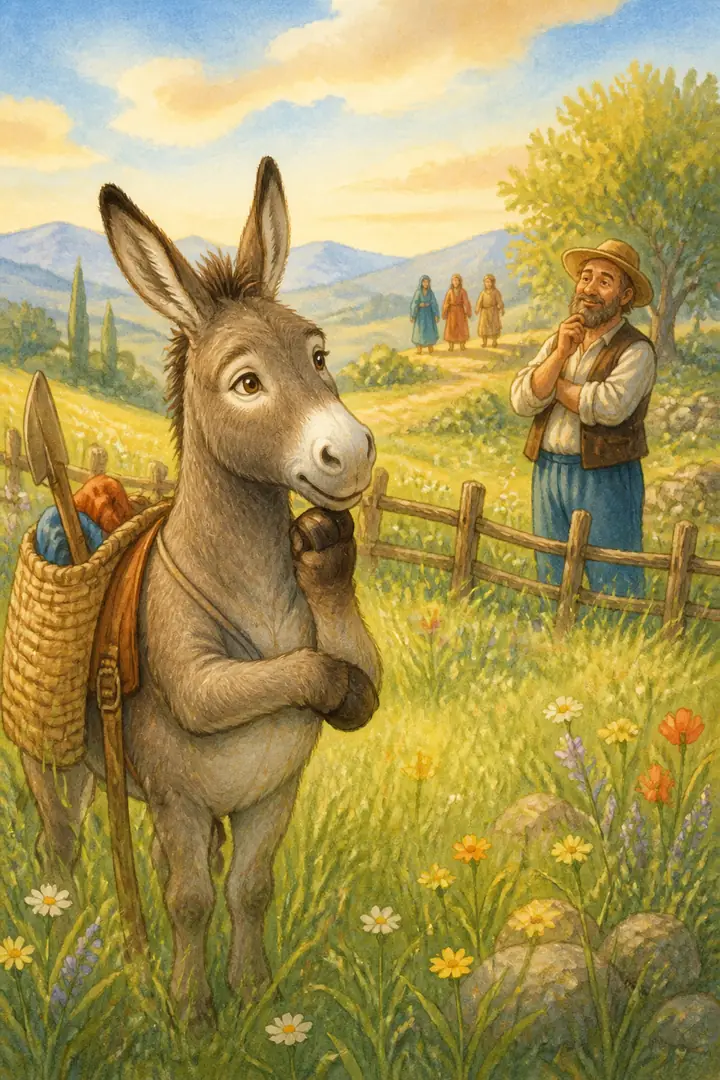
When armed strangers approached, a farmer urged his donkey to flee. The donkey asked whether a new owner would make him carry heavier loads.
Hearing that his work would probably stay the same, he saw little reason to panic over a name that would not change daily life. Lesson: Judge a change by its real consequences, not only by its name.
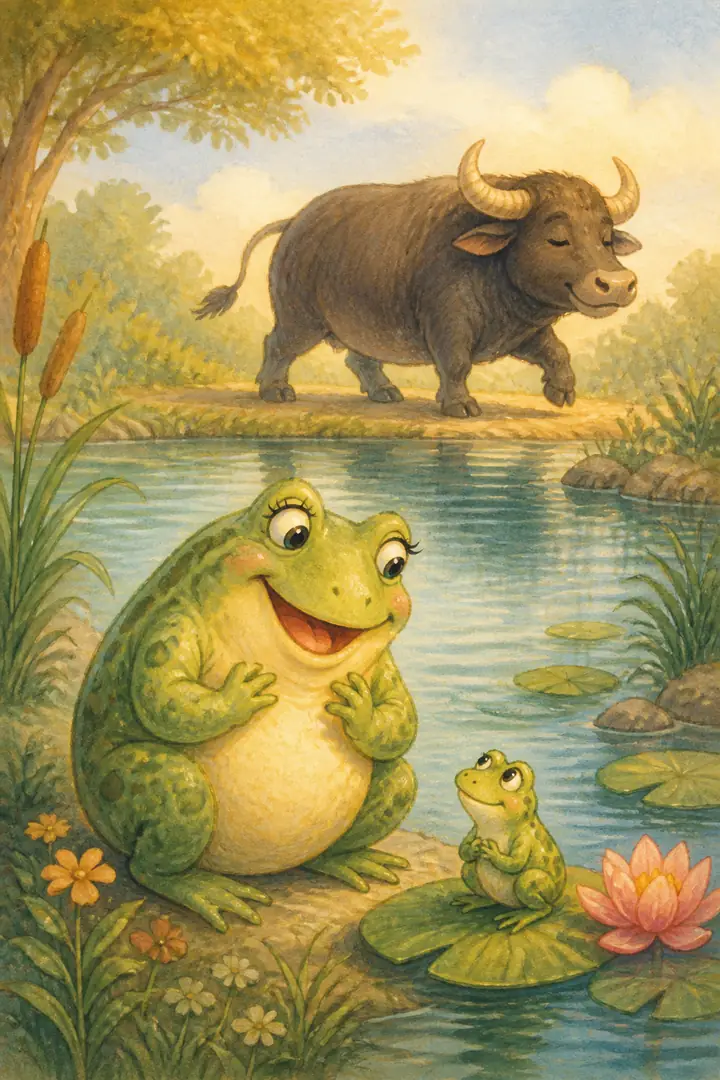
A young frog described an enormous ox near the pond. His mother puffed herself larger and larger, asking whether the ox was her size yet.
Finally, she laughed at the impossible comparison and accepted that frogs and oxen were built differently. Lesson: Trying to appear greater than we are can become foolish and harmful.