
PAGE 1
The Dog and the Wolf
A wolf caught a thin farm dog, who persuaded him to wait until a coming feast made him plumper. Later the wolf returned and found the dog safely on a roof.
Pillow Time Story
Ten engaging fables about learning from danger, self-control, fair boundaries, hidden risks, suitable methods, clear responsibilities, attention, honesty, and trust.
A wolf caught a thin farm dog, who persuaded him to wait until a coming feast made him plumper. Later the wolf returned and found the dog safely on a roof.
The dog refused to repeat the dangerous mistake of resting by the gate. Lesson: Learn from a narrow escape and change the behavior that created the risk.

A wasp repeatedly stung a snake and clung where he could not reach it. In rage, the snake considered a desperate action that would harm them both.
He stopped, slid beneath water, and waited until the wasp flew away. Lesson: Do not destroy yourself merely to defeat someone causing harm.
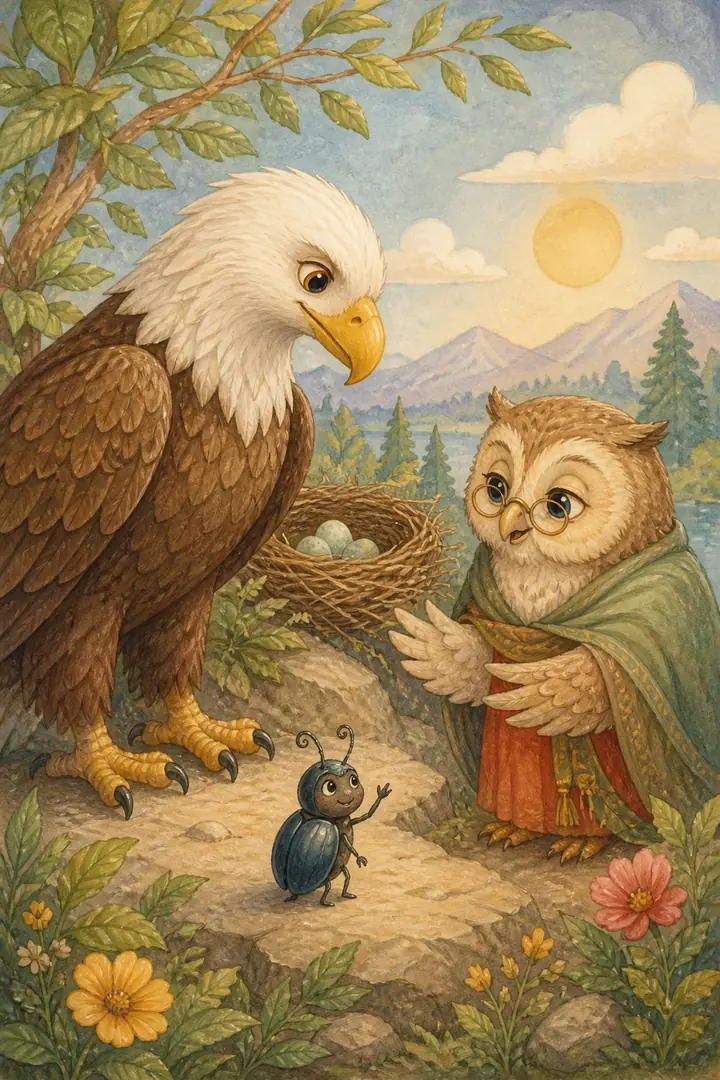
An eagle ignored a beetle's plea to spare a hare under its protection. The tiny beetle then found clever ways to disturb the eagle's nest, proving that size did not make him powerless.
A mediator helped them end the cycle and respect one another's boundaries. Lesson: Never assume a smaller opponent is incapable of resisting injustice.
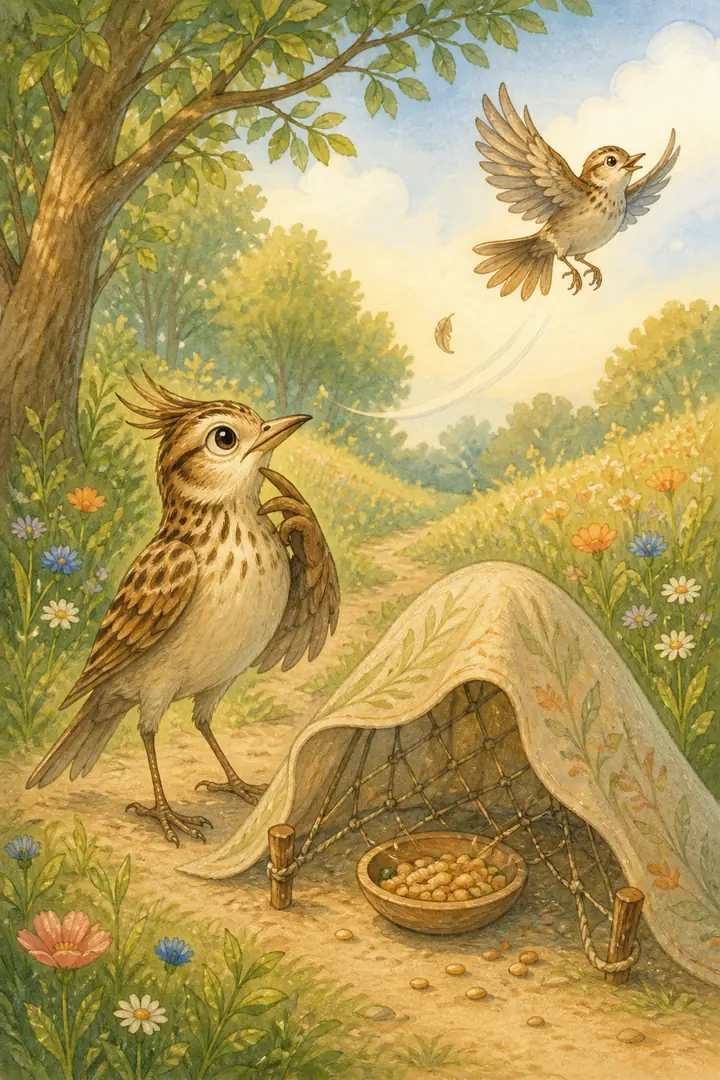
A bird catcher claimed he was "building a city" while arranging a hidden net. A curious lark approached the bait and nearly became trapped.
She escaped, realizing that a welcoming name cannot make a dangerous place safe. Lesson: Judge an invitation by how it works, not by what someone calls it.

A fisherman played beautiful flute music, expecting fish to leap willingly into his basket. None appeared.
When he used the proper fishing tool, he succeeded. Watching them jump afterward, he understood that a pleasant talent does not replace the right method for a task. Lesson: Match your method to the problem you are trying to solve.

A weasel asked a homeowner for mercy, pointing out that she had caught mice and lizards. The homeowner also knew she had disturbed hens and stolen food.
Rather than harm her, he sealed the house and released her far away, recognizing both help and damage. Lesson: Evaluate the complete effect of someone's behavior, not only the part they advertise.
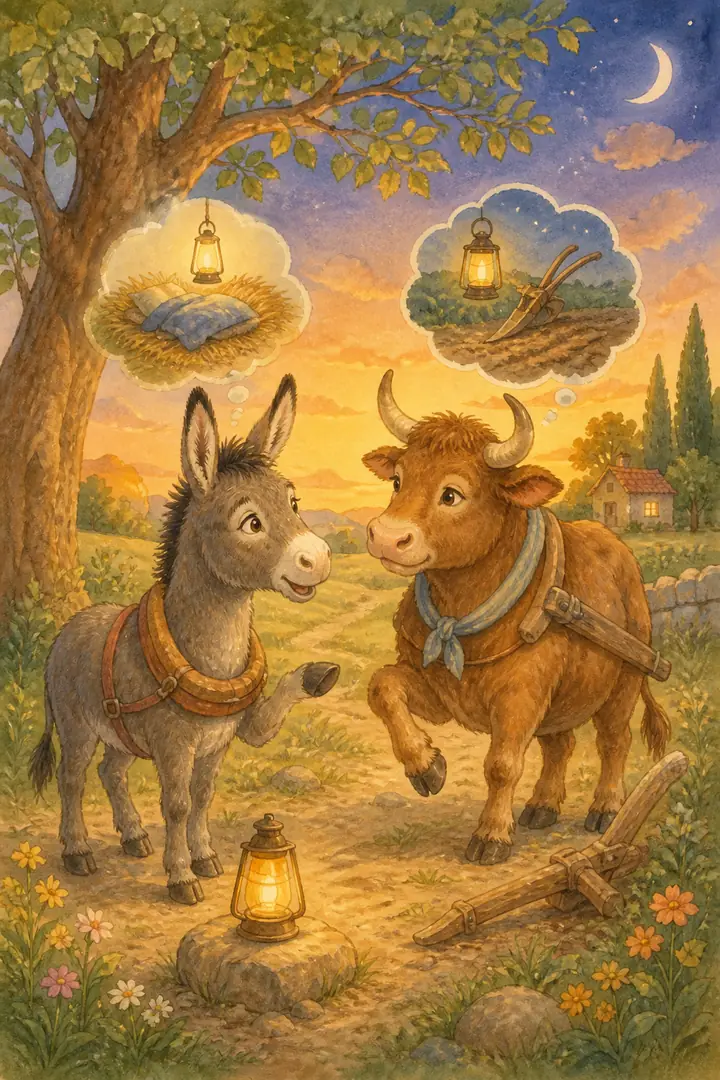
A donkey and an ox worked together all day at the plow. When evening came, the donkey assumed the shared labor meant the ox would also take over his usual job carrying the farmer home.
The ox reminded him that helping with one task did not automatically exchange every responsibility. Lesson: Clarify how work will be divided instead of relying on assumptions.

Citizens ignored an important public speech, so Demades began a curious fable about a goddess, a swallow, and an eel crossing a river. Everyone suddenly listened and demanded the ending.
He reminded them that their real civic responsibilities deserved at least as much attention as entertainment. Lesson: Enjoy stories, but do not let distraction replace important duties.

After a shipwreck, a dolphin helped a monkey toward shore, believing he was a person. The monkey tried to impress his rescuer by pretending to know places and people he did not understand.
His answers exposed the lie, and he had to admit the truth before the dolphin continued helping him. Lesson: Dishonest boasting can endanger the trust on which help depends.
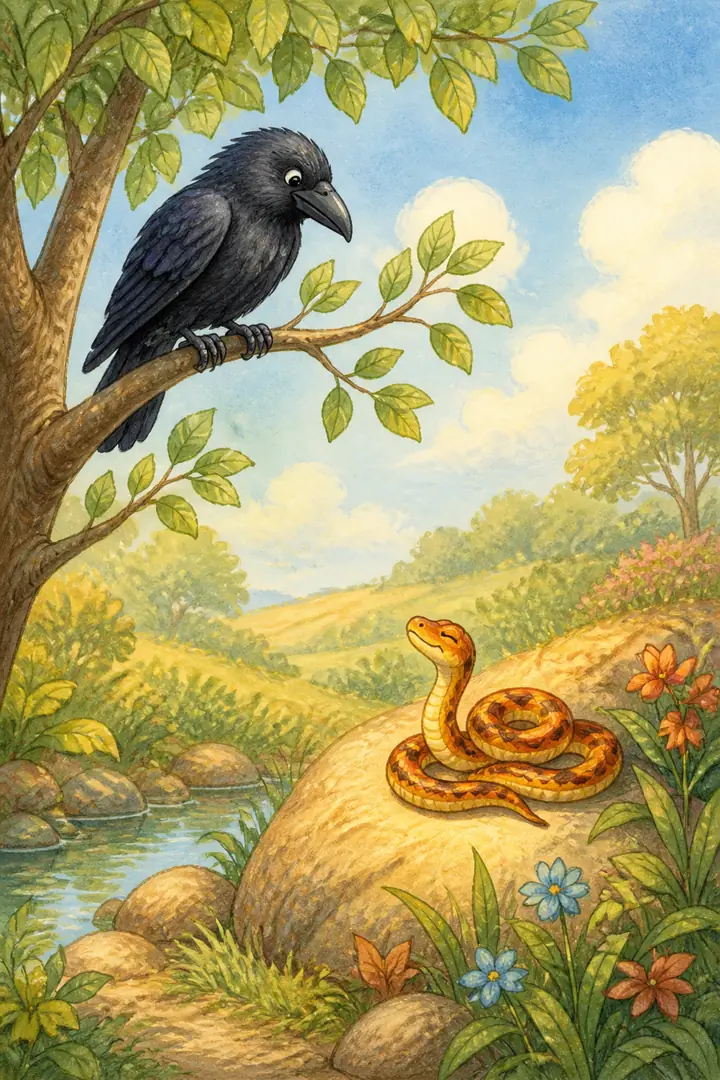
A hungry crow saw a snake resting in the sun and thought he had found an easy meal. He swooped down without checking whether the snake was dangerous and was nearly bitten.
Escaping upward, he learned that an appealing opportunity may conceal serious risk. Lesson: Examine a tempting prize before rushing to take it.